Island of Tabarca
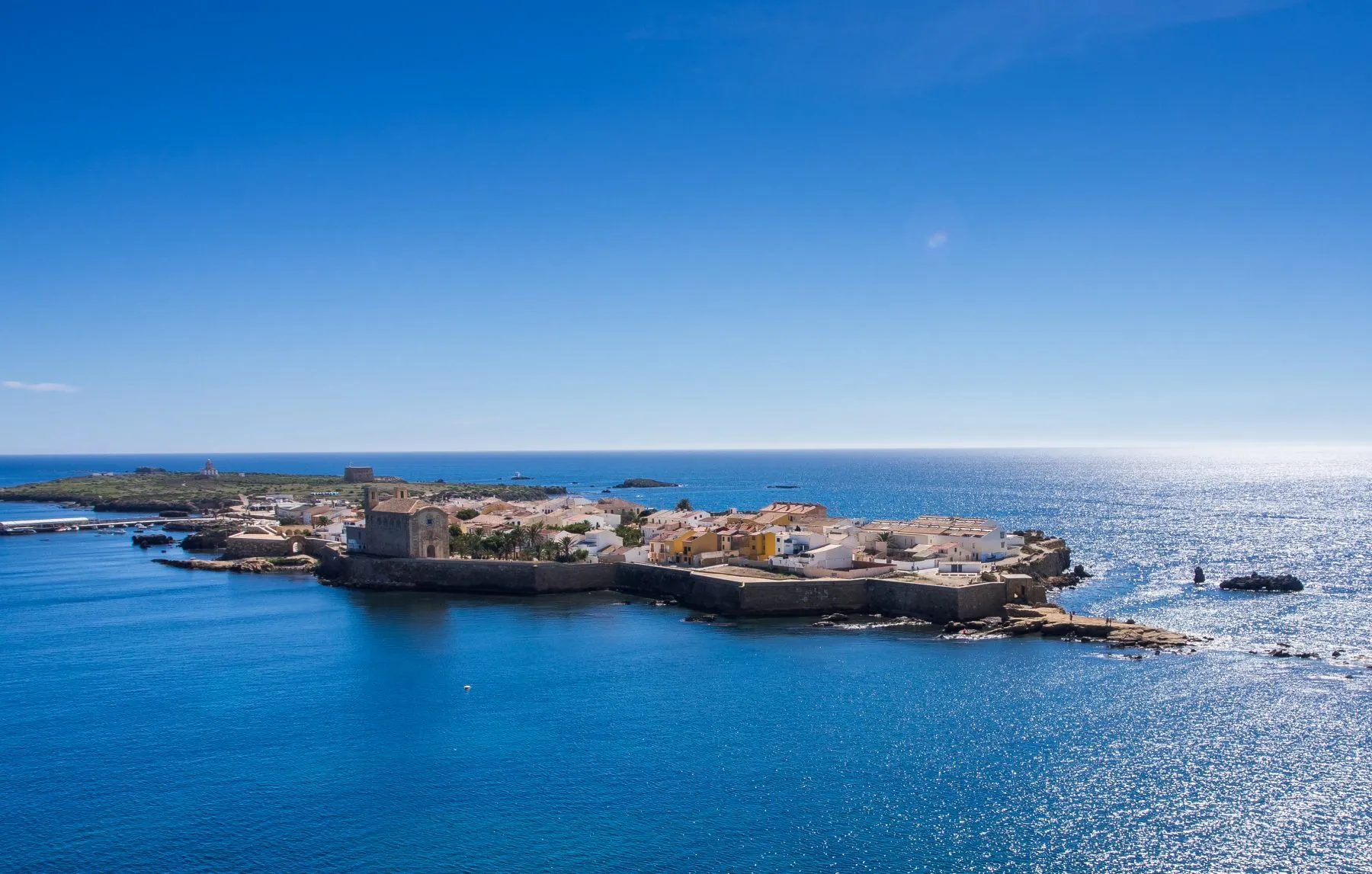
The only inhabited island in the Valencian Community. Water so clear you'll see the bottom from the boat, 18th-century walls and the first Marine Reserve in Spain. Just 25 minutes from Santa Pola.
What do you want to discover in Tabarca?
Tabarca Island — everything you need to know before you go
An unlikely destination: just 30 hectares that have it all. On a single walk you go from an 18th-century wall to a crystal-clear cove, from a fishermen's street to a path without a single building, and from a historic dish to a protected Marine Reserve.
Its waters were declared a Marine Reserve in 1986 — the first in Spain — and protect more than 1,860 hectares of the Mediterranean. Posidonia meadows filter the sea naturally, giving Tabarca that glassy clarity that lets you see the bottom without getting wet, even from the boat.
What makes Tabarca unique is a combination you won't find twice: a walled 18th-century old town perfectly preserved, beaches of turquoise water with spectacular seabeds, and the cooking of caldero tabarquino — a Genoese recipe from 1769 that's only made here.
And all of it is 25 minutes by catamaran from Santa Pola.
How to get to Tabarca Island
The only way to reach Tabarca is by boat — there's no bridge and no land access. The fastest and cheapest departure point is Santa Pola: a 25-minute crossing with underwater views included.
From Santa Pola — 25 min
The closest point. Santa Pola Fishing Port, Av. de los Baños, 1. Look for the orange ticket office. Underwater views included with every ticket. Book online.
🎫 Buy a ticket → 📅 See the timetable →From Alicante — 45 min in total
There's no direct ferry from the city of Alicante. The way there is 20 min by car on the N-332 to Santa Pola + a 25-min crossing. All in, under 50 minutes door to door from the centre of Alicante.
From Torrevieja / Guardamar
From Torrevieja: 25 min on the N-332 to Santa Pola. From Guardamar del Segura: only 15 min. Perfectly doable as a day trip.
Parking in Santa Pola
Free public area next to the pier (Calle Patricio Zammit, 2 min walk). In high season, paid options: Parking AMFISA · Parking Marina Miramar · Parking del Castillo. All less than 5 minutes on foot.
What to see on Tabarca Island
Walled old town
The only example of 18th-century military town planning preserved intact in Spain. Built by order of Carlos III in 1769 for the Genoese fishermen freed from Algiers. Three gateways pierce the original wall — San Rafael, San Miguel and San Gabriel.
Tabarca Marine Reserve
Declared in 1986, it's the first marine reserve in Spain. It protects more than 1,860 ha of unique Mediterranean biodiversity: posidonia meadows, grouper, octopus, moray eels and shoals of colourful fish you can see from the catamaran or with a simple snorkel mask.
Church of San Pedro and San Pablo
Built in the 18th century in baroque style. Its fleur-de-lis floor plan is inspired by the coat of arms of Carlos III. Beside it stands the Torre de San José — once a prison, today offering the best views over the old town.
Tabarca lighthouse
Built in 1854 at the eastern tip. The path to the lighthouse crosses the wildest, emptiest part of the island. On clear days you can make out the Alicante coast perfectly. Panoramic 360-degree views, without the crowds.
Beaches and secret coves
Playa de Levante for families, Cala del Francés for snorkelling with 15 m visibility, Playa Seca and Cala Blanca for solitude on the north side. La Poera, a small sheltered inlet, is the favourite with young children.
Caldero tabarquino
Food defines Tabarca as much as its history. The caldero — whole rock fish with potatoes, alioli and creamy rice cooked in the stock — is an 18th-century Genoese recipe that exists nowhere else. Order it as soon as you sit down: it cooks slowly.
Nueva Tabarca Museum
Free entry. Inside the walled town, it tells the story of the Genoese fishermen freed from Algiers who repopulated the island. Check before you go whether the museum is open and its opening hours. A must before you walk the walls.
The best beaches in Tabarca

Playa de Levante
The most popular and easiest to reach. Calm, shallow water, perfect for children. Fine sand and views straight onto the walled village. You'll find it to the right as you step off the boat. It fills up in summer — come on the first boat.
Cala del Francés
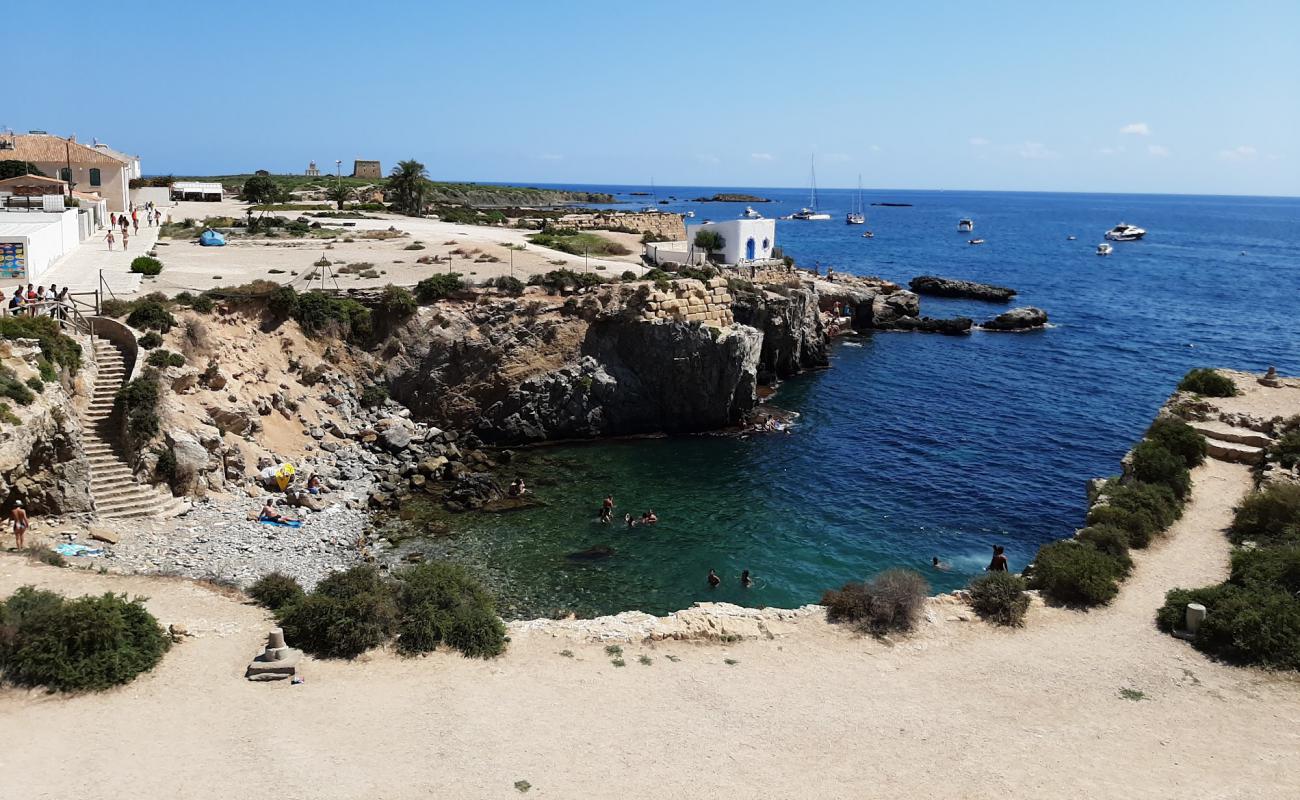
The favourite among divers and snorkellers. Rocky seabeds with posidonia meadows, grouper, octopus and moray eels. The Marine Reserve waters offer visibility of up to 15 m on windless days. Even basic goggles make it spectacular.
Playa Seca and Cala Blanca
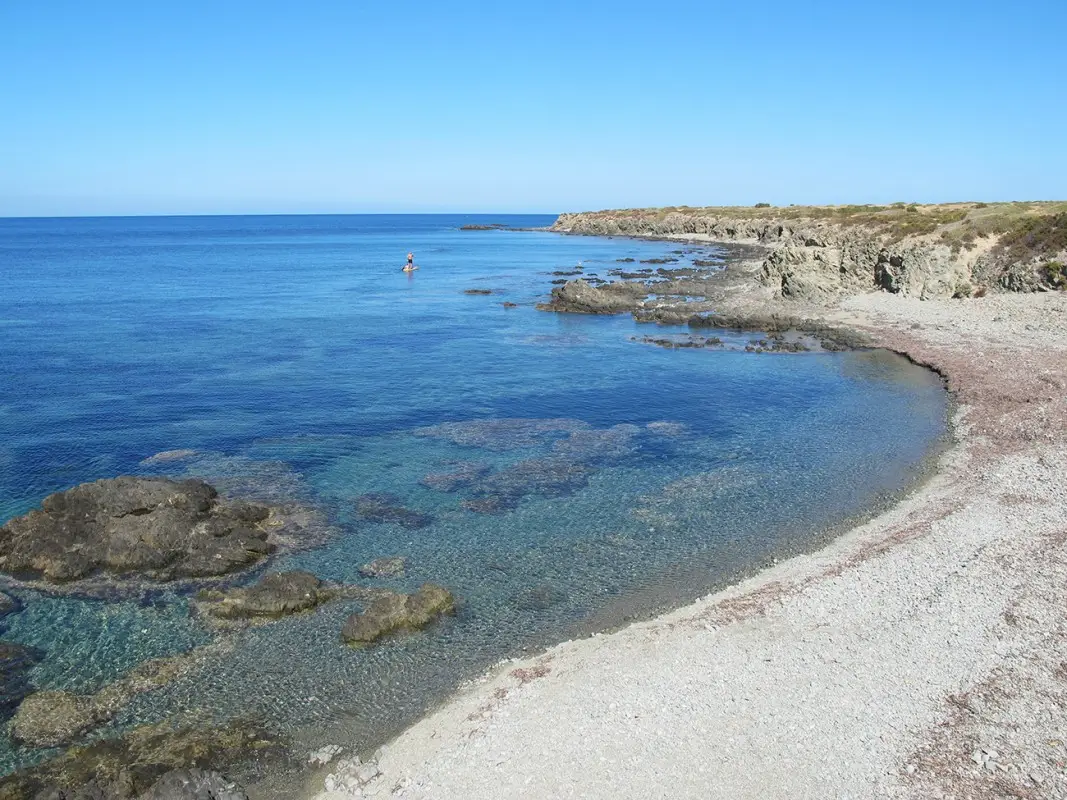
On the north side of the island — the wildest and least visited. The walk there is part of the experience: open views over the Mediterranean without a single tourist. Perfect if you want the Tabarca nobody photographs.

La Poera
A small inlet sheltered between rocks, ideal for young children: very calm water, shallow, with a sandy bottom. Easy access from the centre of the village. No waves. The safest, calmest beach on the island.
Spain's 1st Marine Reserve: a paradise underwater
In 1986, Tabarca became the first marine reserve in Spain. Today it protects more than 1,860 hectares of the Mediterranean — an area equivalent to 2,600 football pitches — with exceptionally clear water thanks to its vast posidonia meadows.
You don't need to be a diver. With basic snorkel goggles you can see octopus, moray eels, grouper and shoals of fish a few metres from the shore. And on our catamaran, the underwater views are already included in your ticket — 4 submerged glass viewing points to enjoy the seabed without getting wet for a second.
- Spain's 1st Marine Reserve — declared in 1986
- 1,860 ha of protected marine biodiversity
- Snorkelling straight from the shore · no experience needed
- Posidonia · grouper · octopus · moray eels · seahorses
- Underwater views included in the ticket
- Fishing completely banned throughout the reserve

Things to do on Tabarca Island
Snorkelling
The star activity. The Marine Reserve waters have exceptional visibility. Bring basic goggles and water shoes — the bottom is rocky in the best spots. No experience or special gear needed.
Walking
A coastal path runs around almost the whole island. In 2 hours you can walk it end to end. The north side, wild and tourist-free, gives you views of the open Mediterranean you won't see on any postcard.
Historic tour
Walk through Spain's only 18th-century military town plan. Baroque church, Torre de San José, the three walled gateways and the historic cemetery by the sea. Living history at every step.
Food
Caldero tabarquino is an experience you'll find nowhere else in the world. Book a table as soon as you arrive — it cooks slowly and is only available when there's a catch of the day from the Marine Reserve.
A day on Tabarca Island — the ideal itinerary
Arrival in Tabarca
Walk the old town, the walls and the Torre de San José before the busiest hours arrive.
Playa de Levante or Cala del Francés
Choose Levante if you're travelling as a family, or Cala del Francés if you want to snorkel over the rocky seabeds of the Marine Reserve.
Caldero tabarquino
Lunch in one of the village restaurants. If you want caldero, order it when you arrive: it cooks slowly.
Museum, lighthouse and north side
Nueva Tabarca Museum, the path to the lighthouse and the north side of the island, the quietest part, open to the Mediterranean.
Last boat back to Santa Pola
Back to the port of Santa Pola. Check the current timetable and don't leave the last return to the last minute.
What to eat in Tabarca
You can visit hundreds of Mediterranean islands and eat seafood. But caldero tabarquino only exists here — a recipe the Genoese fishermen brought from Tunisia in 1769 and that three generations of Tabarca cooks have kept alive. Order it as you sit down. It only cooks slowly if there's a catch of the day from the Marine Reserve.
Caldero tabarquino
The absolute emblem. Whole rock fish with potatoes and alioli, followed by creamy rice cooked in the stock. Only available when there's a catch from the reserve.
Hand-caught squid
Caught by hand using traditional techniques. The texture and flavour bear no comparison with farmed squid. Grilled or in its own ink.
Arroz a banda and black rice
Cooked in stock made from the reserve's fish, they soak up the taste of the pure Mediterranean. Served with homemade alioli. Hard to find their equal on the mainland.
Where to sleep on Tabarca Island
The island has a small but genuine range of places to stay. Sleeping in Tabarca lets you experience sunset and sunrise without tourists: the island almost nobody sees.
Hotel Santacreu — the island's boutique hotel
The most comfortable option if you want a private room, a good location and a well-kept stay inside the village. Book ahead in July and August.
La Trancada and Cala Tabarca B&B — Tabarca charm
Small, welcoming places with local character. Ideal for couples who want a quiet night and a walk around the island once it empties.
Tabarca houses — traditional holiday rentals
Village houses adapted for families or small groups. The most authentic way to experience Tabarca at a different pace.
The history of Tabarca Island
A refuge for Barbary pirates
For centuries the island was a base for Barbary corsairs from North Africa who raided the Valencian coast. Its privileged position in the Mediterranean made it the most strategic maritime control point in the area.
Carlos III founds the walled village
King Carlos III rescues Genoese coral fishermen held captive in Algiers since 1741 and settles them on the island. He commissions the walled village — the only 18th-century military town plan preserved in Spain. He names it Nueva Tabarca, after the Tunisian town where they had lived as prisoners.
Construction of the Tabarca lighthouse
The lighthouse is built at the eastern tip of the island to guide ships crossing the Mediterranean. It's still working today and is one of the most photographed spots in Tabarca for its 360-degree panoramic views.
First marine reserve in Spain
Tabarca's waters are declared the first marine reserve in Spain, protecting 1,860 hectares of unique Mediterranean biodiversity. Since then the underwater life has recovered spectacularly — today it's one of the best snorkelling spots in the western Mediterranean.
Catamarán Nueva Tabarca — 50+ years on the route
Since 1972 we've run the Santa Pola – Tabarca Island crossing, as the pioneering and most experienced operator on the whole route. More than 50 years taking travellers to discover the most special island in the Spanish Mediterranean, with glass-bottom boats and underwater views included with every ticket.
Practical information about Tabarca
When to go
The boat runs during the season — check the current dates. The best months: May, June and September — good weather, warm water and far fewer people than in July and August. High season: buy online in advance.
Cash and payments
There's no cash machine on the island. Bring cash for restaurants and beach bars — not all of them take cards. There are cash machines in Santa Pola on the seafront promenade, right before you board.
Signal and WiFi
There's 4G coverage from the main networks in the inhabited area. On the north side and at the lighthouse the signal can be weak or non-existent. The bars' WiFi is limited. Go offline: it's part of the experience.
What to bring
Sun cream and a hat (very little natural shade). Parasol and beach chair — they fit on the boat without any problem. Water shoes for rocky areas. Snorkel goggles. Cash. And water, though there are shops on the island too.
Pets
Pets travel completely free on the Catamarán Nueva Tabarca. On the island they can go on the paths and most areas. Restrictions on the main beach in high season. Full pets guide →
Services on the island
A medical post on duty in summer. Several restaurants, beach bars and a shop for basics. The hotel occupies the old Casa del Gobernador — book months ahead in high season.
Everything you need to know about Tabarca
500+ verified reviews
Real travellers Santa Pola → Tabarca
Ready to discover Tabarca Island?
Pioneers since 1972 · underwater views included · 25 min from Santa Pola
🎫 Book nowFlexible ticket · valid any day of the season · Book online · pets travel free · instant confirmation